Placefinding and Placemaking
Reflections on the Lectionary for July 19th

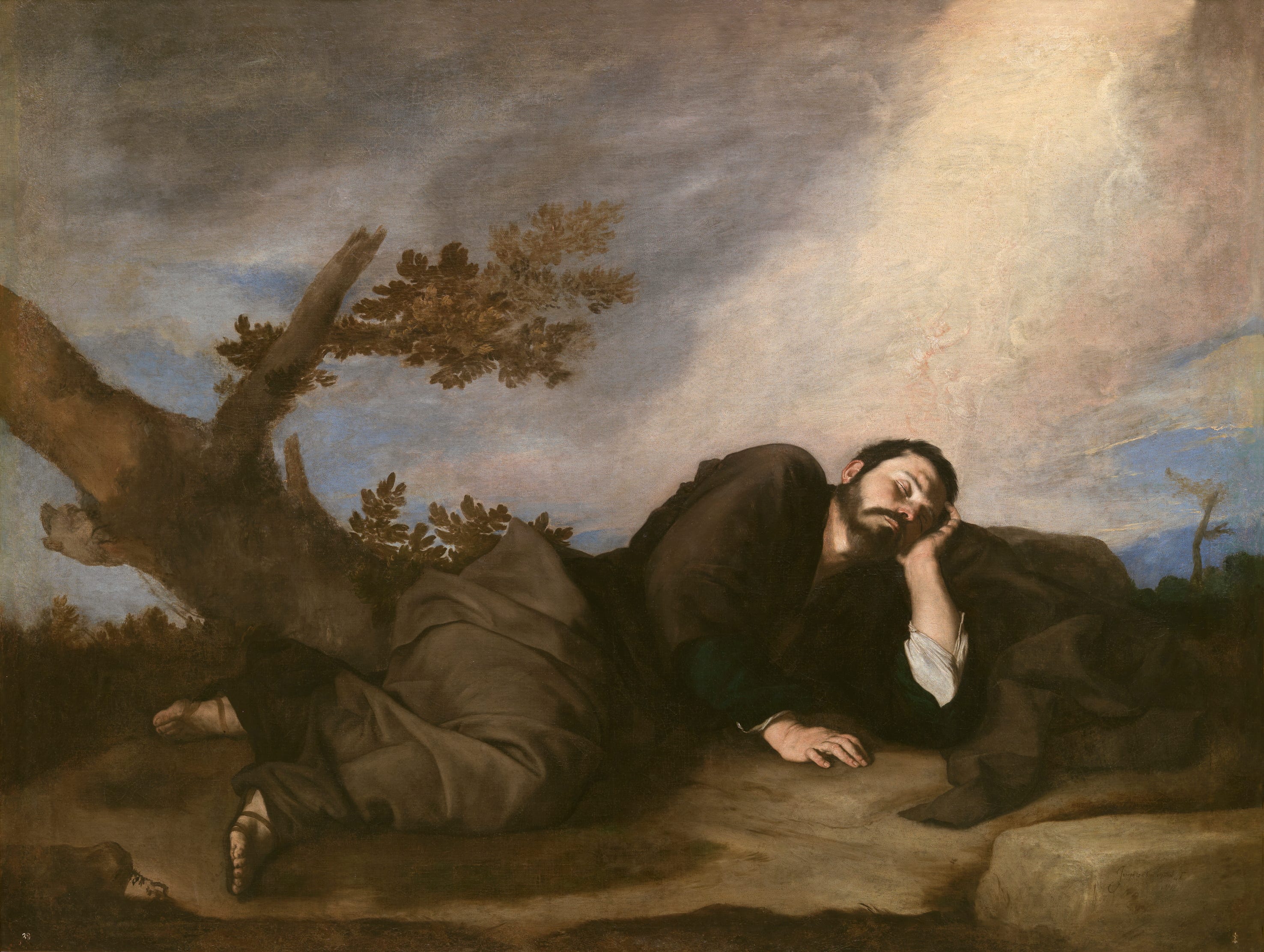
By the end of this week I’ll be wrapping up a six-week stint in Sewanee, Tennessee. I have been here most of June and July taking classes as part of a Master of Fine Arts in creative writing degree. This is my second summer in residence as part of the program, and there will probably be two more summers before it’s over with. Sewanee is a beautiful place high on the Cumberland Plateau, about halfway between Chattanooga and Nashville: thickly forested, laced with streams, sounding with birdsong, and aglow with the light of fireflies. It’s a magical place to study writing and hone a craft.
This time in Tennessee has been a really interesting study in the importance of place—an example of the way location and setting matter for creativity. I can write in Colorado, of course. I have two offices where I can work (and often do), and soon I hope to have a space at home where I can write as well—a set-aside and set-apart sanctuary. But for years I have recognized that to truly write with focus and clarity—to really let my mind be free—I often need to locate my body in a new place. Five or six times over the years I have holed up in a beach house to write books, and those experiences have been crucial to my ability to publish scholarly work. Several years ago I spent a week in Minnesota at the edges of lakes and woodlands, learning from brilliant writers, and I found enough inspiration there to launch this Substack and put me on the path to my current MFA work. There’s magic when you’re able to move outside your everyday environments, find the places where you can pay attention to ideas and inspiration, and focus on new things. This summer, as I came to Tennessee for the six-week residency, I was feeling burnt out, uninspired, and listless in my writing. I was worn out from a busy year of professional transitions and huge sabbatical projects. Now as I’m preparing to leave this place and head back home, I’m feeling full of energy and I’m carrying new approaches to my work, my writing, and my creativity.
There’s a theorist of religion, Thomas Tweed, who points out that religious experience is often a product of, and a dialogue between, crossing and dwelling. So much of what we call religion is about moving from one place to another—metaphorically or literally—and it’s about abiding in a place. Both of those orientations to space can produce experiences of the holy; both crossing and dwelling can help us see things we would have missed otherwise. Crossing over to a new place, like me traveling to rural Tennessee, can open us to new understanding and new awareness. And dwelling in a place—stopping to become a part of a landscape and calling it home for a while—can also change our perspective. The Bible is full of stories of people on the move: the people in Sinai, Jesus in the wilderness, Abraham and Sarah journeying, Paul on the road to Damascus, the disciples on the road to Emmaus. Those journeys seem to always produce numinous experiences. And the Bible is also full of stories about homemaking and placefinding, where people encounter God and locate themselves by finding a place to dwell.
The Hebrew Bible reading in the lectionary this week is a story like that. It’s the story of Jacob’s journey from Beer-sheba to Haran, and his pause along his journey. It is a story of both crossing and dwelling—both a journey from one place to another, and of stopping to inhabit a place for a while. He came to a certain place and stayed there for the night, Genesis says, because the sun had set. Jacob chose a rock to use as a pillow and he laid down to sleep.
When Jacob fell asleep, he had a dream. This dream is often called Jacob’s Ladder, and it is the subject of one of the most beautifully haunting songs in the Christian musical canon. (There’s also Stairway to Heaven, made famous by Led Zeppelin, but it’s not quite as focused on the story from Genesis). The story of Jacob’s dream of the ladder (or stairway, as many modern translations put it) is both simple and evocative. And he dreamed that there was a stairway set up on the earth, the story says, the top of it reaching to heaven, and the angels of God were ascending and descending on it. Jacob had a dream—a vision, in some ways—of a blurring between heaven and earth. He saw the boundary between the divine realm and the human realm fade away, and he watched the ordinary dissolve into the holy.
Surely the Lord is in this place, Jacob exclaims upon waking from his dream, and how awesome is this place. Jacob continues in his enthusiasm: This is none other than the house of God, and this is the gate of heaven. Clearly Jacob’s dream experiences led him to believe that he was in the presence of some especially holy and divinely-charged spot. He marked the location by standing up the stone upon which he had dreamed, and he sanctified it by pouring oil. He called the place Bethel, which is a conglomeration of two Hebrew words, meaning house of God.
Reading through this story, I’m struck by Jacob’s sense of surprise and delight at finding a place where God is so present—where the veil, as many people would put it, is especially thin. That’s an experience many people have, in many different kinds of places. Sometimes simply being in a place is enough to trigger heightened experiences of religious feeling. Sometimes entering a new space helps us feel a sense of the divine around us, and sometimes it’s returning to an old familiar space that does that. But in either case, the movement between spaces seems to be really important for helping us become attuned to something beyond ourselves.
The same is true for creativity, or nostalgia, or peace, or well-being: these feelings can well up inside of us, or recede, as we move from place to place. The opposite is also true; we can feel dread or foreboding or fear as we move between spaces too. Our bodies are pretty good at helping us find our bearings in new surroundings or in old, and our minds take cues from the signals our bodies send.
In the Christian tradition, and especially in the Protestant part of the Christian tradition, we tend to locate our religion in our heads. We tend to talk about religion in terms of belief, using the language of faith, by which we mean that religion is about thinking certain things and holding certain truths. And that’s certainly a part of it. But I think we forget that religion is also about space and place, and the ways our bodies move through those spaces and places. Religion is intimately connected to our physical existence. I no longer believe all the things I believed when I was an evangelical teenager, but I can remember how it felt to sing certain songs. I no longer attend the churches I went to as a child, but I can remember the way the adults there treated me with kindness, the way they made sure we had lemonade and cookies after school, and the ways they made children like me feel welcome in the building. I no longer work at the Christian summer camp where I once was a counselor, and my theology has traveled a long way since then, but I still feel the same sense of awe and reverence when I’m among the forests and when I remember what it felt like to be young and seeking. When we locate religion only in our minds, or even only in our hearts, we miss a lot of what’s important.
Jacob understood that, which is why he marked the place where he had dreamed his dream, and why he stood his pillow rock up on its end as a witness to his experience. That was a common practice, in those days—to raise a standing stone to mark a place. We still do that today—we still signify the holiness or specialness of certain places or spaces. We still mark a kind of sacred geography, remembering the places that have been important to us on our journeys.
I often think about Thomas Tweed’s theory of religion in terms of crossing—in terms of finding new spaces and experiencing new spaces. But Tweed’s other category is just as important. Dwelling, the act of making a home or establishing a place—putting down roots, as we often say—can be just as important. In a few days I’ll start my journey back home, and that feels energizing and life-giving too. There’s a lot to be said for familiarity, routine, and nesting into a place. The longer I have been away from home, the more I find myself excited to dwell again—to make space among the places and people I know best.
Maybe Jacob felt that way too. Maybe that’s why he kept on journeying after his dreamy night. He knew that he needed both; he needed to cross into new experiences, but he also needed to keep traveling back to where he called home. He raised a standing stone to mark his experience and his progress through new spaces, but in the end he made his way back to dwell where he knew best, and he made his life in the place that he called home.