Cause and Effect
Reflections on the Lectionary for the Fourth Sunday of Lent

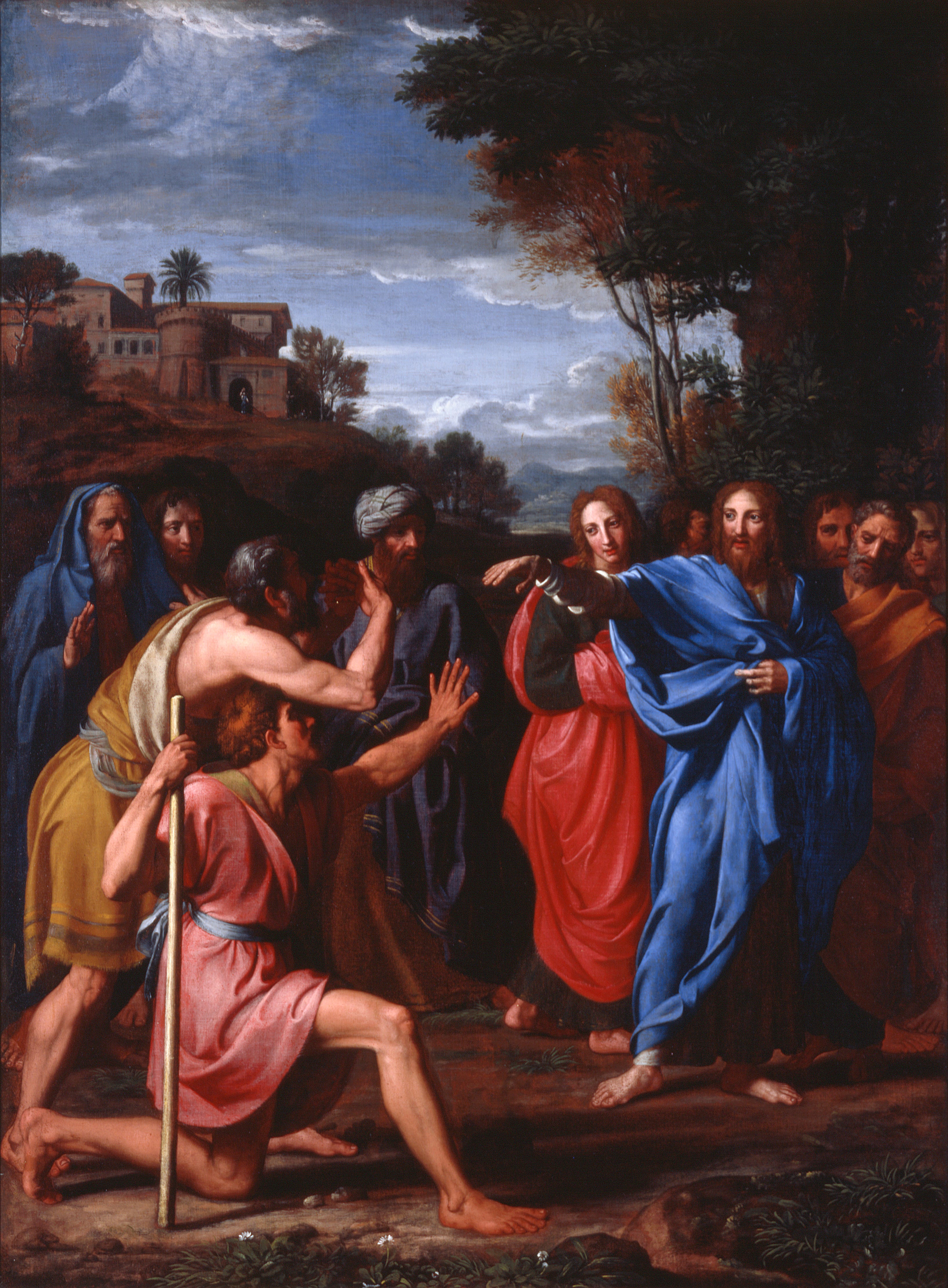
From the beginning, I want to acknowledge that some passages from the Bible are timeless. They remain relevant despite changing circumstances and shifting cultures, and they age like wine, getting better with time. And other passages age like milk, curdling and souring with the passage of time, the world changing around them. I don’t think it should offend us to acknowledge this. Some parts of the Bible simply don’t hold up very well in new contexts and circumstances.
The gospel reading from the lectionary for the fourth Sunday of Lent, John 9:1-41, is one of those passages that has curdled like milk. I think, in its earliest contexts and for its earliest readers, this passage was meant to invoke liberation and point toward something beautiful. This passage was likely intended for good. But as time has passed and our understanding has shifted, the things that the author of John (and Jesus too, for that matter) clearly thought of as uncomplicatedly or unambiguously good have shifted. Where once the experience of disability might have felt like a useful way to talk about sin, and where once the blatant anti-Judaism of this passage made a certain amount of sense to early followers of Jesus who were trying to differentiate themselves from Jews, both of those contexts have now shifted enough that this passage has become a real problem. Because of that, this is a tricky and dangerous section to read, and to preach. It requires a lot of contextualization and explanation to even use a passage like this in worship settings—contextualization and explanation that far too often does not happen. It’s even reasonable to question whether we should read a passage like that at all, especially in a season as prominent as Lent. I think there’s enough good in here to justify all the work it takes to interpret it responsibly, but others might feel differently. Proceed with caution!
One of the reasons I think this passage is worth keeping and paying attention to is that it is asking really good, fundamental theological questions about the causes of things. Why do bad things happen, the passage is asking, even if we might not agree with John or Jesus that disability is an obviously bad thing (or that ability is obviously good). Conversely, why do good things happen? How does causality work in this world? It’s a deep question of theology because it’s a deep question of life: probably most of us at some point or another will find ourselves faced with some event, diagnosis, circumstance, or condition, and we will find ourselves asking why.
The setup for this Gospel of John story is that the existence of a sightless man became the pretext for a discussion about cause and effect. (This is one of the basic ways this story is problematic: the way this man’s life and circumstances become fodder for a theological debate that at least at first did not consult him or consider his feelings or opinions about his own body). Jesus was walking with some of his disciples and saw “a man blind from birth,” and his disciples asked Jesus whose sin was responsible for the man’s disability. “Rabbi, who sinned, this man or his parents, that he was born blind?” There is a whole worldview embedded in their question, much of it having to do with causality. Their question assumes that disability is always a result of sin; it’s just a question of whose sin is to blame. It’s a question with roots deep in the Hebrew Bible, and especially what’s called the Deuteronomistic Tradition, which assumes that bad things (disability, but also conquest, poverty, environmental destruction, and misfortune) are the consequences of sin. This sin might be individual, it might be communal, it might be national, or it can even be inherited—but when bad things happen, the Deuteronomistic Tradition holds, it is because of sin.
Interestingly, this view of cause and effect is challenged elsewhere in the Hebrew Bible. Sometimes in the parts of the Hebrew Bible that transmits the Deuteronomistic Tradition, misfortune comes because God is punishing people, or allowing them to be punished. But in other places in the Hebrew Bible, misfortune has other causes. Most famously, the book of Job envisions misfortune as a kind of divine test, administered on God’s behalf by Satan to ensure a person’s perseverance and righteousness. In other places, especially the Psalms and wisdom literature, misfortune is something that comes into every life, and God is a comforting presence waiting to endure it with us. There are many ways to think about why bad things happen that don’t reckon them as the consequence of sin. But when they asked their question, the disciples weren’t thinking of any of those other ways. They wanted to know whose sin had caused the man’s blindness.
Jesus’ answer was, in its earliest contexts, probably meant to be liberatory. It was probably taken as evidence of theological progress. “Neither this man nor his parents sinned,” Jesus responded, rejecting the false dichotomy of the question. So far so good. But “he was born blind so that God’s works might be revealed in him.” Interesting.
In Jesus’ answer, one troublesome form of cause and effect has been swapped out for a different one. Neither the man’s sin nor his parents’ sin caused his blindness. Great. But God caused it, Jesus says, so that in this very moment Jesus’ actions might bring glory to God. Hmmm.
I’ll repeat that this explanation probably sounded good a long time ago. Jesus’ answer likely looked like justice, then, or at the very least it looked like deep consideration. It was an honorable way to talk about something that would have been thought of as dishonorable; it was a divine veneer on a condition that would have brought a lot of shame and marginalization to the man, as the disciples’ question demonstrates. If everyone assumed that his blindness was the result of sin, then saying it was the result of God’s will was probably a major upgrade.
But I’m not so sure that the explanation Jesus gives—that the man’s physical condition is a setup “so that God’s works might be revealed in him”—is the feel-good story that Jesus seems to think it is. Is this really how the world works? Obviously a lot of people think so (“everything happens for a reason”), but I have my serious doubts. Are all tragedies and illnesses and difficulties simply props in God’s great demonstration of sovereignty? Are all instances of thriving and flourishing just examples of God showing off? I have fundamental trouble seeing the world that way. (And this is before we get into the question of whether ability or disability map neatly onto things like “difficulties” and “flourishing”). All kinds of people pass through all kinds of experiences, and many of them have no obvious connection to any revelation of “God’s works.” We all know people who have had physical disabilities (like the man in this story), or who have experienced loss or grief or limitation of some kind. Many of us have lived those experiences ourselves. Are all of them opportunities for divine demonstrations? Or are only some of those experiences linked to God, and the rest are part of the arbitrariness of life? Either way, we are left with a capricious vision of God, and a wholly unsatisfying explanation of human experience.
While at the beginning of this story the man blind from birth does not get consulted and isn’t really asked about his thoughts, eventually the Gospel of John lets the man speak for himself. “I am he,” he says in 9:9, and then he goes on to tell his own story to his incredulous and curious neighbors. From that point onward, the story becomes a back-and-forth referendum on Jesus, in which the neighbors and others (“Pharisees” at first, then later “the Jews” in John’s characteristic way of speaking, though everyone in this story was Jewish) question the man’s experience and question Jesus’ powers. There’s a lot of second-guessing going on in this story—second-guessing of the man’s own experiences, and second-guessing of Jesus’ credentials and power. The crowd even asks the man’s parents to explain things, but to their credit, they simply refer people back to their son. “Ask him; he is of age,” they say, and “he will speak for himself.” This is an important move that John makes, and one of the only redeeming things in this story, in my opinion. In a story where everyone is speaking on this man’s behalf and discounting his experiences and his self-understanding, the man’s parents are the only ones to insist that their son’s voice should be heard.
Near the end of this passage, in 9:39-41, Jesus and the man are talking, and Jesus is revealing himself as the “Son of Man” in whom the man ought to believe. As part of that conversation, Jesus makes clear the meaning of the man receiving sight. “I came into this world for judgement,” Jesus says, “so that those who do not see may see and those who do see may become blind.” This leads “some of the Pharisees who were with him” to ask Jesus if he was talking about them. There are two things worth pointing out about this exchange. First, John has here returned to “Pharisees” rather than “the Jews,” which seems significant—and there is a certain degree of intimacy or at least proximity between Jesus and the Pharisees in this story. This is likely to reflect history, in my opinion; I think Jesus and the Pharisees were likely more closely aligned than the New Testament gospels often portray them. But second, this exchange shows how Jesus has reshaped disability into a metaphor for understanding, even as he began the story by denying that disability is an effect of sin. Here blindness becomes a way to talk about awareness or knowledge, pointing to how Jesus himself will foster understanding in some people while leaving others without knowledge. We do this colloquially all the time, though disability advocates consistently ask us to stop—we use sight as an idiomatic way to talk about understanding or knowledge. “My teacher helped me see something,” we might say, or “I had a blind spot,” or we “turn a blind eye” to something.
Considered as a whole, this story from John is a bit of a mess. It’s here in the lectionary for the fourth Sunday of Lent because the readings for that day carry themes of light and darkness, sight and unseeing, visibility and invisibility. As the fifth of Jesus’ seven “signs” in the Gospel of John, this story gets pride of place in a high season of the church year. This Sunday, tens of millions of people will hear this story read aloud and interpreted in church, and I find myself wondering what the effect will be. It’s a starkly anti-Jewish passage, which is bad enough, but this story also perpetuates the disability-as-deficiency message that it purports to reject. Even as the story begins with Jesus rejecting the idea that sin causes blindness, the story ends with Jesus claiming that blindness describes a lack of insight or understanding. The arc of this passage is hardly toward justice or liberation. The man who was born blind seems pleased with the fact that Jesus healed him, and that is good. But of the tens of millions of people who will hear or read this story this Sunday, probably tens of thousands of them will themselves be blind, or will have limited or diminishing sight. What will this passage mean to them?
I see that the sequence of posting might be confusing… what is in this passage is confusing for how to present it.
Judgment is so damaging and shame is here as well… we need to find the ways that we can connect with all folks… especially people who live with different abilities… it’s our work and our joy.
He worked to earn a day of us riding a couple of his ranch horses. As soon as he was in the saddle, he turned to me and suddenly, I could understand his speech perfectly and his joy in this sudden moment was so supreme…
It was a true blessing for both of us…