Advent Politics
Reflections on the Lectionary for the Third Sunday of Advent

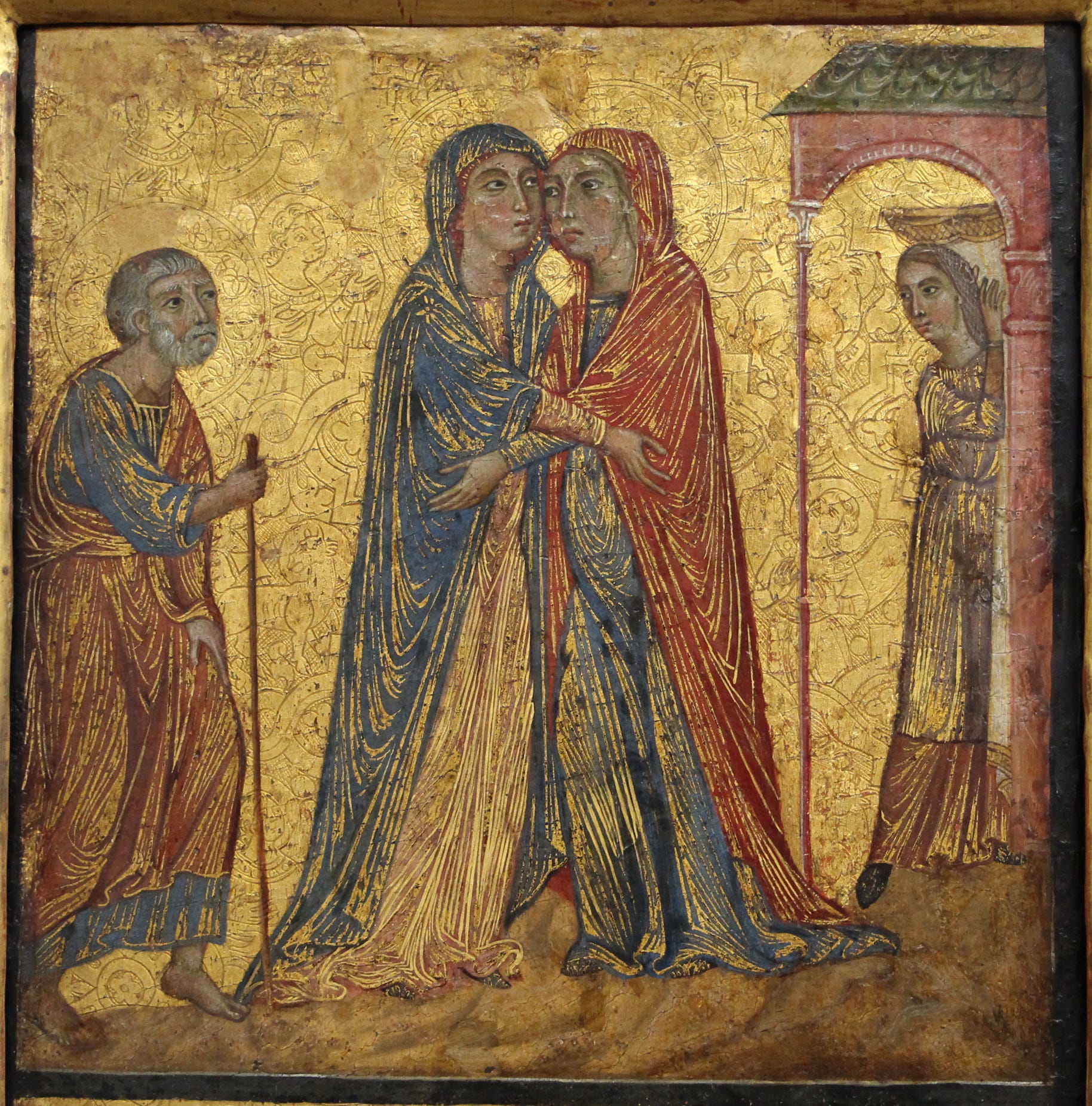
I am currently holed up in a house on the North Carolina coast, working on a book. This will be the fifth or sixth book that I have written this way, depending on how you count. It’s a familiar pattern at this point. I give myself a daily word count quota—usually about 1500-2000 for dense academic writing, and upwards of 4000-5000 for writing that’s meant for a popular audience. This time I’m aiming for 5000 words a day, because I’m on a tight deadline. The manuscript is due at the end of the month, and I currently only have about 30% of the book drafted. But with a lot of solitude and focus (courtesy of my work and my family, and everyone who supported my Go Fund Me that’s paying for all this) I’m feeling confident in my ability to churn it out in the next couple of weeks. So far, so good.
But there’s something I keep feeling a little less confident about. The book that I’m writing is about the Book of Acts—familiar territory for me. But my other writing about Acts has been mostly academic, and while some of it has been stark in its analyses of power and violence, I haven’t written anything quite like this book before. This book will put the Book of Acts—with all its accounts of violence, imperial territoriality, crooked justice systems, prisons, and marginality—in conversation with the United States of America in the second Trump administration. I haven’t written anything quite this political before (even though I don’t feel like I am going too far out on any limbs at all in my analysis). I keep imagining the people who will read it, and what their reactions might be. I imagine that some of the reactions won’t be friendly.
That’s why the lectionary texts for the third Sunday of Advent feel like such a gift to me. Even though I make my home on the theological leftward edge of American Protestant Christianity, I still have that little devil on my shoulder—like many of us do—reminding me to keep politics out of religion. Even though I know that’s a false dichotomy and that many people actually prefer politics in their religion (and don’t understand why we would separate them out), there’s something about being in the religion business in the United States that makes it feel like the two don’t belong together. But the lectionary for this Sunday gives us permission—indeed, it compels us—to put politics and religion together, where they belong, and to pay attention to the ways religion not only allows political engagement, but demands it.
This is true of most of the lectionary passages this week, but I am thinking especially of the two gospel readings: the Magnificat or Song of Mary from Luke, and Matthew’s account of Jesus’ response to John the Baptist’s query from prison about the nature of Jesus’ ministry. Both of these passages present religious sentiment in starkly political terms, and they both characterize the work of the divine in ways that would make even American leftists blush. Reading them, it’s hard to escape the feeling that some of Jesus’ revolutionary spirit has been replaced with cowardice in 21st century American Christianity. These texts are advocating nothing short of an overturning of the social order and a reversal of the world’s structures of power, and here many of us are, worrying that we will lose pledges if we mention health care from the pulpit.
Let’s start with the Magnificat. Luke is the only gospel that includes this song from Mary, which is patterned substantially on the Song of Hannah from 1 Samuel 2:1-10. The song gets its name from its first word in Latin, which is the “magnifies” word in English. That word tips the whole song off as a song of praise, and indeed it is a praise song—a praise song for God’s disruptive and world-breaking work. (Let’s get this put into a proper evangelical praise song format, in which the same lines repeat again and again, and see how it goes). He has brought down the powerful from their thrones and lifted up the lowly, Mary sings, he has filled the hungry with good things and sent the rich away empty. It would make for a fantastic evangelical praise song, as far as the genre goes. I’m not sure it would fly theologically, which should tell us something.
I love this pattern in Luke’s writing, which also shows up in his version of the Beatitudes. It’s not enough for Luke to proclaim the lifting up of the people on the underside of the world’s power structures. Luke also wants to see the mighty cast down. To put it another way, Luke is not very interested in the form of social justice that claims that a rising tide lifts all boats. Instead, Luke—and Mary—wants to see the world turned upside down (to use another Lucan phrase, from the middle part of Acts). In this song, Mary looks around and sees that the powerful have been riding roughshod over the weak, and for her the only solution is for the weak to take the places of the powerful, and for the powerful to learn something about what it means to be on the underside of things.
That is, of course, a political stance that’s rooted in economic justice, and it’s a political stance that’s more radical than anything available from a mainstream American political party. And that’s the kind of thing that might feel like a problem, when you’ve been charged with proclaiming this passage to a congregation. How am I supposed to preach this without being accused of pushing a Democratic agenda, we might ask? But that’s the good news—no one could plausibly accuse the Democrats of pushing anything as radical as the thing that God is praised for doing here in the Gospel of Luke, in words coming out of the mouth of Mary the mother of God.
If we move over to the Gospel of Matthew and its account of the exchange between Jesus and the imprisoned John the Baptist, we will find something very similar. It’s worth pausing to take stock of the situation. John the Baptist—the forerunner to Jesus, as the New Testament has it, and perhaps a rival and a seemingly close ally—was sitting in prison. He had been scooped up by Rome’s client ruler Herod, and he was awaiting his fate, which would eventually be execution.
Sitting in prison, John the Baptist was understandably wanting to know the stakes of his struggle. He had begun to wonder whether the work he had done—the work of making a path for Jesus—had been as important as he had imagined or hoped. Had he really, John was wondering, had he really been the forerunner of the one he had been waiting for? Are you the one who is to come, or are we to wait for another? He sent word to Jesus, via his own disciples, and asked the question.
Jesus’ response was, notably, not about himself. Jesus did not respond with any assertions of his own identity, in the way we might expect a theologian to do when explaining whether or not Jesus was the one who was to come. There’s not a word of credal formula. Instead, Jesus told his disciples to tell John what they had seen and heard for themselves. Jesus felt confident that if John could get a glimpse of the way the world was changing, then he would know the answer to his own question. The blind receive their sight, the lame walk, those with a skin disease are cleansed, the deaf hear, the dead are raised, and the poor have good news brought to them, Jesus says—summarizing his own perspective on his ministry.
There’s a case for nuanced caution to be made here, when we interpret a passage like this in the 21st century. While cures for blindness, lameness, leprosy, and deafness might have seemed like uncomplicated good things in the past, disability advocacy has shown us that this kind of discourse of healing can be frustrating, hurtful, or harmful to people living with these and other disabilities. The insights of disability theorists have helped us see that the New Testament’s healing stories can perpetuate stereotypes and harm. So we should be careful.
Still, there is another way to view these kinds of stories, too—that the people who had been most unfairly marginalized by society were being lifted up, and that the same kind of reversal imagined by Mary in the Magnificat is a part of Jesus’ own self-understanding. And Jesus moves beyond those cures for disabilities too, claiming that the dead are raised, and the poor have good news brought to them. I like to read this little litany as an ascending, intensifying list, from least important to most important. Jesus is asking John’s disciples to convey to John, in prison, that the blind receive their sight, but that more than that the lame walk, but that more than that those with a skin disease are cleansed, but that more than that the deaf hear, but that more than that the dead are raised, but that more than that the poor have good news brought to them. It’s not a random list, but a list of interventions in the world that begins with healing and proceeds to the very resurrection of the dead, and then—as the most impressive and substantive healing of all—the poor receive good news. In that way of reading Jesus’ account of his own ministry, the most important thing about him was not that he healed people, and it was not even that he raised the dead, but it was that Jesus came announcing the upturning of the world’s systems of power. Bringing good news to the poor was the culminating, clinching argument that Jesus sent back to John the Baptist as proof that he was the one whom John had been waiting for.
These are politics, but they are Advent politics. The season demands it. You can’t claim the Magnificat, and you can’t participate in Jesus’ own vision of his ministry, unless you expect to see the proud scattered, the power brought down, and the lowly lifted up. You can’t do Advent without bringing good news to the poor. You probably can’t preach any of that without being accused of being political, but then again, neither could John, and neither could Jesus. It wasn’t without its perils; both John and Jesus ended up on the wrong end of imperial violence in the end. But still—the world was changed and it was changing, as Jesus asked John to notice from prison, and the hungry were being filled and the rich sent away empty, as Mary sang. Walking around pregnant, preparing to have a baby, Mary was humming about how God was bringing down the powerful and lifting up the lowly. It’s a tune worth remembering again.
This was exceptionally good, thank you (including, but not only, the disability stuff). Keep writing!
Happy writing :)